Ojai Living: A Guide to Relaxed, Retreat-Style Life in Town
May 28, 2026
May 28, 2026
Wondering what it would actually feel like to live in Ojai full time, not just visit for a weekend? If you are drawn to a slower pace, a walkable downtown, and easy access to trails, arts, and everyday essentials, Ojai offers a lifestyle that feels both grounded and distinctive. This guide will help you picture daily life, housing character, and how Ojai connects to Ventura and the coast so you can decide whether it fits the way you want to live. Let’s dive in.
Ojai is a small valley city in Ventura County with about 7,474 residents and roughly 4 square miles of land area. The city describes itself as the smallest city in Ventura County, located about 12 miles north of Ventura and the Pacific Ocean. That smaller scale shapes how the town looks, feels, and functions day to day.
The city also points to creative culture, environmental sensitivity, a spiritual focus, tree-lined streets, and independent businesses as part of Ojai’s identity. Just as important, local planning documents show that preserving small-town scale and locally distinctive storefronts is an active goal. In other words, Ojai’s character is not accidental. It is something the city intentionally protects.
Ojai’s Mediterranean climate also plays a big role in its lifestyle. With hot, dry summers and mild winters, the area supports an outdoor rhythm for much of the year. That climate helps explain why the town often feels relaxed, open-air, and retreat-like.
One of the biggest lifestyle draws in Ojai is its compact downtown core. Instead of centering daily life around large commercial corridors, Ojai revolves around a lower-rise, visually distinctive downtown with public spaces, local shops, and community gathering spots.
Libbey Park is one of the clearest examples of that civic center. The city says the park includes a playground, tennis courts, a community bandstand, and Libbey Bowl. It also serves as a venue for community events including the Ojai Music Festival and the Ojai Tennis Tournament.
The downtown area also includes places like Cluff Vista Park and Arcade Plaza within the historic business district. City design guidelines for the Arcade emphasize Mission Revival storefront standards, which helps preserve a cohesive look and feel. For you as a resident, that can translate into a downtown experience that feels more curated, walkable, and locally rooted than a typical strip retail pattern.
Ojai’s weekly routine is shaped in part by its year-round certified farmers markets. According to Ventura County and state market lists, the Ojai Certified Farmers Market takes place on Sundays from 9 a.m. to 1 p.m. at 300 E. Matilija St., and the Ojai Community Farmers Market runs on Thursdays from 3 p.m. to 7 p.m. at 414 E. Ojai Ave.
That kind of market schedule can become part of everyday living rather than a once-in-a-while activity. It supports a lifestyle centered on seasonal produce, repeat local vendors, and regular downtown errands. If you value routines that feel more personal and place-based, this is one of the strongest lifestyle markers in town.
Ojai is not fully car-free, but it does offer more local circulation options than many smaller valley communities. The City of Ojai says the Ojai Trolley serves downtown circulation, while Gold Coast Transit provides connections to Ventura and surrounding areas.
That means some short trips can be handled locally without always getting on the highway. At the same time, having a car is still practical for accessing the wider valley, trailheads, and regional destinations. For many buyers, that mix of local convenience and broader mobility is part of Ojai’s appeal.
In Ojai, outdoor recreation is not just a special weekend plan. It is built into the rhythm of living here. The Ojai Valley Land Conservancy says it manages about 2,300 acres of open space and 27 miles of trail in the valley, with trails that connect into a larger system linked to Los Padres National Forest.
That access creates a lifestyle where nature is close at hand. You may find that a morning walk, a trail outing, or time in open space becomes a regular part of your week rather than something you need to schedule far in advance.
The Forest Service also identifies specific recreation points tied to Ojai, including Gridley Trail and the Piedra Blanca Trailhead in the Ojai Ranger District. The Jacinto Reyes Scenic Byway also runs through the district as a scenic access corridor in Ventura County. Together, these resources reinforce the idea that Ojai offers meaningful access to hiking and scenic landscapes right from the valley setting.
Ojai’s outdoor access pairs naturally with the city’s described environmental sensitivity and spiritual focus. That combination helps explain why the town is often associated with a retreat-style atmosphere. The feeling comes not from one attraction, but from how climate, open space, small-town form, and daily routines work together.
If you are looking for a place where time outdoors can fit easily into ordinary life, Ojai stands out. The town supports a pace that often feels more intentional and less rushed than larger nearby markets.
Ojai’s arts scene is unusually central for a city of its size. The Ojai Valley Museum serves as both a museum and visitor center focused on the valley’s history, art, and culture. The Ojai Art Center says it has operated since 1939 and is the longest continuously operating multidisciplinary arts center in California, with eight branches, classes, and recurring events.
That matters because it means arts and culture are woven into civic life rather than pushed to the sidelines. For residents, that can create a stronger sense of community rhythm throughout the year.
Music is another major part of Ojai’s identity. The Ojai Music Festival says it began in 1947 and continues as an annual festival of classical and contemporary music, with performances in Libbey Bowl and other downtown venues. When events like these take place in the center of town, they become part of the everyday atmosphere, not just something happening somewhere else.
From a housing perspective, Ojai leans heavily toward detached residential living. The City of Ojai says single-family homes make up about 80 percent of all residential buildings, and Census data shows an owner-occupied rate of 59.2 percent. Those numbers suggest a market with a strong base of long-term residential ownership and a housing pattern centered largely on single-family properties.
Census QuickFacts also reports 3,150 households, 2.34 persons per household, a median owner-occupied home value of $1,016,200, and median gross rent of $1,955 for 2020 through 2024. For buyers, these figures offer a broad snapshot of pricing and tenure in the local market.
Ojai’s general plan says the city works to preserve small-town character and avoid development patterns dominated by automobiles, corporate architecture, or suburban subdivisions. It also aims to ensure that new development fits the community’s physical and social setting.
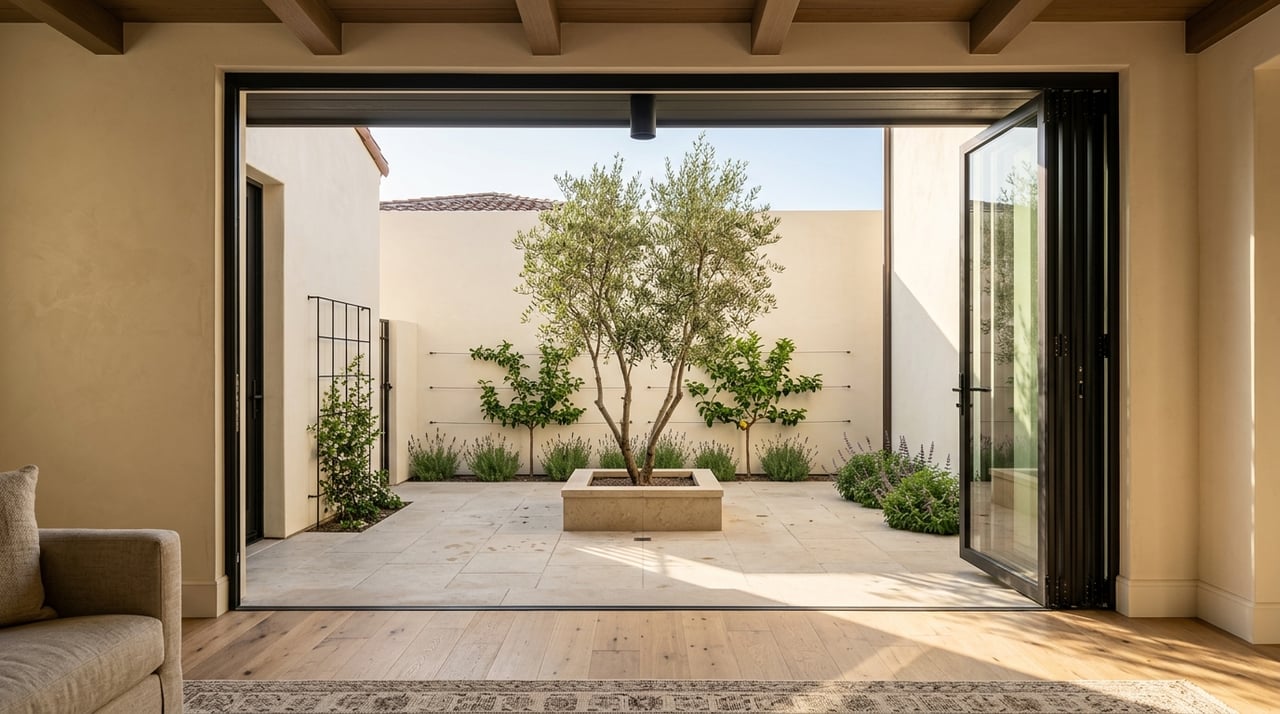
As a result, Ojai is often best understood as a place with character homes, low-rise neighborhoods, and some rural or foothill properties within a town that actively protects its scale and visual identity. That does not mean every home is the same style. It means the overall built environment tends to feel more cohesive, lower profile, and more place-specific than many surrounding markets.
If you care about architectural charm, neighborhood feel, and a sense of visual continuity, that planning framework may be especially meaningful. It is one reason Ojai often appeals to buyers who want lifestyle as much as square footage.
Although Ojai feels tucked away, it is still well connected to Ventura. The city places Ojai about 12 miles north of Ventura and the Pacific Ocean, and local transit information confirms links between Ojai and Ventura through Gold Coast Transit.
For many residents, that means Ojai can function as an inland retreat with practical access to coastal recreation, errands, and broader regional connections. You get a distinct valley setting without feeling entirely removed from the coast.
Census data also reports a mean travel time to work of 21.6 minutes. While your own commute will depend on your route and schedule, that number gives added context to Ojai’s position as a smaller residential community with workable access to nearby employment and services.
Ojai can be a strong fit if you are looking for a residential setting that prioritizes pace, character, and access to nature. It may also appeal if you want a downtown that feels active but not overwhelming, with parks, events, markets, and local businesses close together.
You may find Ojai especially compelling if your ideal home search includes:
For buyers relocating within Ventura County or coming from outside the area, Ojai often stands apart because it offers a very specific lifestyle mix. It is small in scale, but it has a strong sense of place.
If you are considering a move to Ojai, it helps to look beyond listings and think about how you want your days to feel. The right home here is often about more than bedrooms or lot size. It is also about whether you want your routine to include a farmers market stop, a downtown stroll, nearby trail access, and a town that works hard to preserve its character.
When you are ready to explore Ojai with a local, strategic perspective, Larry Krogh can help you evaluate neighborhoods, home styles, and lifestyle fit across Ojai and the surrounding Ventura County market.
Our client-first approach means we take the time to understand your unique needs and goals, offering personalized solutions that deliver exceptional results. With decades of experience and a deep knowledge of Ventura’s luxury real estate market, we’re here to provide guidance, insight, and unwavering support from start to finish.