Downtown Santa Barbara's New Restaurants Open as State Street's Plan Advances
September 3, 2026
September 3, 2026
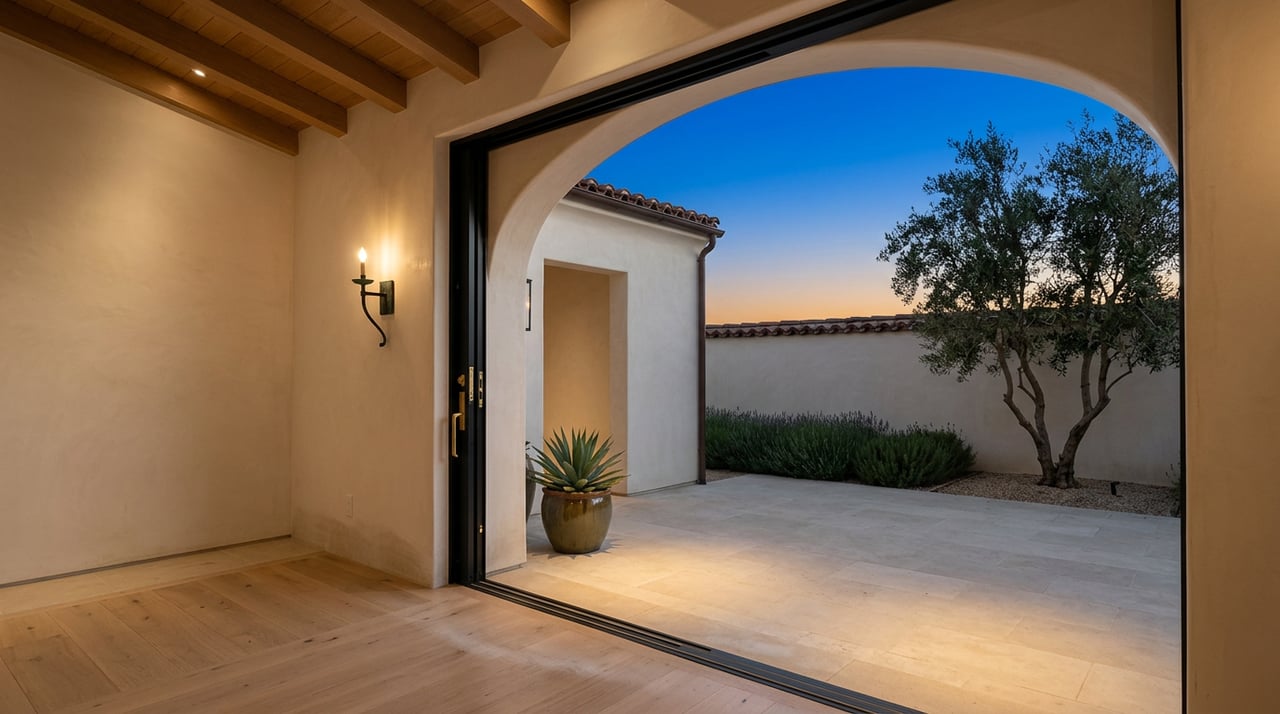
Walk into Little Mountain on a Wednesday night and you will likely wait for a table. The dining room in Montecito's Upper Village, styled after the region's Spanish Colonial houses with brick floors and a custom wood-fired hearth, opened less than a year ago. It has already landed a spot in the Michelin Guide, one of just twelve new California additions this year. A few miles north on Coast Village Road, Monte's spent months lining up a supply relationship with Rincon Hill Farm's no-till fields before it opened its doors in March. Neither restaurant is behaving like a business hedging its bets. Both are behaving like businesses that expect to still be there in five years.
State Street, where much of this new activity is concentrated, remains the focus of a long-term planning process.
On July 1, the Santa Barbara City Council voted 5-2 to extend Title 31, the ordinance that has kept the nine downtown blocks between Haley and Victoria closed to cars since the early days of the pandemic. The vote does not make the promenade permanent. It makes the current configuration legal to keep exactly as it is, for up to six more years, while the city keeps working on a plan that would eventually replace it with something else entirely.
The longer horizon makes implementation—not just approval—the central question.
The city does have an actual design on paper. In April, the council voted 6-1, with Mayor Randy Rowse dissenting, to approve the State Street Master Plan's core concept: retractable bollards at each block from Haley to Victoria that let emergency vehicles through while keeping the street closed to everyone else, plus a redesign of the three-block core between Ortega and Carrillo into what planners describe as a flat, curbless surface that can shift between events, outdoor dining, and plain pedestrian space.
The estimated cost of actually building that plan runs from $48 million to $64 million. Councilmember Eric Friedman used the April meeting to raise a harder problem underneath the design: the promenade's long-term economics depend on downtown housing that does not exist yet. Today there are roughly 350 residential units downtown. The city hopes to eventually add 1,000 to 2,000 more. Until that housing arrives, the promenade's foot traffic skews toward tourists and day visitors rather than the residents who would use it on an ordinary Tuesday in February.
The approved concept still needs funding and construction. Until then, the council's design approval and the extension leave the current street configuration in place.
| Milestone | Date | What it actually did |
|---|---|---|
| Pandemic closure begins | 2020 | Lower State Street closed to cars for outdoor dining |
| Title 31 enacted | 2023 | Closure codified, set to expire end of 2026 or at Master Plan adoption |
| Master Plan design approved | April 28, 2026 | Council votes 6-1 for bollards and a curbless core between Ortega and Carrillo |
| Title 31 extended | July 1, 2026 | Council votes 5-2 to extend the closure up to six more years |
The other piece of infrastructure built for this in-between period is the State Street Loop, a free shuttle of electric golf carts running the length of the promenade. It launched in May 2025, and by that November had carried more than 16,000 riders, including 753 who used it specifically for accessibility needs, according to figures the city presented at its own public meetings.
The city's Access Advisory Committee reviewed the cart last fall and would not sign off on it as ADA compliant, even after the vendor made modifications. The committee asked whether Santa Barbara MTD's electric shuttle, already built to federal accessibility standards, could return to the route instead. As of that review, the Loop was still running on a month-to-month contract extension, funded in increments rather than as a permanent line item.
That MTD alternative does exist, but only part of the year. The Downtown-Waterfront Shuttle returned for its 2026 season on May 29 and runs Fridays through Sundays, 10 a.m. to 6 p.m., with stops at the Amtrak station, Cabrillo Boulevard, the Santa Barbara Zoo, and the harbor. This year's run ends on Labor Day, September 7, so residents who have been meaning to ride it from the waterfront into downtown have a few days left before it goes back into storage for the winter.
Set against that backdrop, this year's restaurant openings look almost stubborn. Aegean took over a spot in De la Guerra Plaza and built a full Eastern Mediterranean kitchen around chef Efe Onoglu. Manifattura committed to a mid-century interior on State Street for handmade pasta and a curated Italian wine list. Dom's Taverna moved into the former Trattoria Vittoria space on East Victoria Street with a Basque-inspired menu from chef Dom Crisp, previously of The Lonely Oyster in Los Angeles. Down at the harbor, Gracie built a seafood-forward menu around a dockside setting steps from the marina.
Monte's and Little Mountain are the clearest examples of what betting on permanence looks like here. Monte's chef, Daniel Kim, previously worked at The Restaurant at Meadowood in Napa and Hibi in Los Angeles; Monte's had established a supply relationship with Rincon Hill Farm before a single plate went out the door. Little Mountain's Diego Moya left New York; its menu is built around Central Coast produce, and within months of opening, Michelin noticed. Those commitments make little sense as short-term plays. Both restaurants are betting that the street underneath them will still be a place people want to walk down in five years, whatever it ends up looking like by then.
That contrast is clearest in what downtown offers on an ordinary evening.
None of the uncertainty changes what is walkable and open right now. The monthly 1st Thursday Art Walk returns September 3, with venues like the Santa Barbara Museum of Art, Benchmark, KAAREM, and Ensemble Theater Company regularly among the stops from 5 to 8 p.m. Downtown Santa Barbara's outdoor dance series runs select Wednesday evenings through September and October, with a free lesson at 6 p.m. followed by open dancing at 7. The Loop shuttle keeps running with no schedule and no app, and for a few more days, so does the shuttle to the harbor and the zoo.
The current configuration can remain in place for up to six more years. How the Master Plan will be implemented, and whether housing that could support its economics is approved alongside it, remain unresolved. Meanwhile, restaurants are opening as the city continues planning State Street's future.
If you are the kind of resident who tracks changes like these because you are weighing what a property downtown or in Montecito is actually worth this year, that is a longer conversation, and one Krogh / Anzaldo Real Estate Group has on a regular basis. Let's Connect.
This article is general information, not legal, tax or financial advice. Consult a qualified professional about your situation.
Grow Something Beautiful in Ventura’s Coastal Climate.
Our client-first approach means we take the time to understand your unique needs and goals, offering personalized solutions that deliver exceptional results. With decades of experience and a deep knowledge of Ventura’s luxury real estate market, we’re here to provide guidance, insight, and unwavering support from start to finish.